
Instruments
DJEMBE
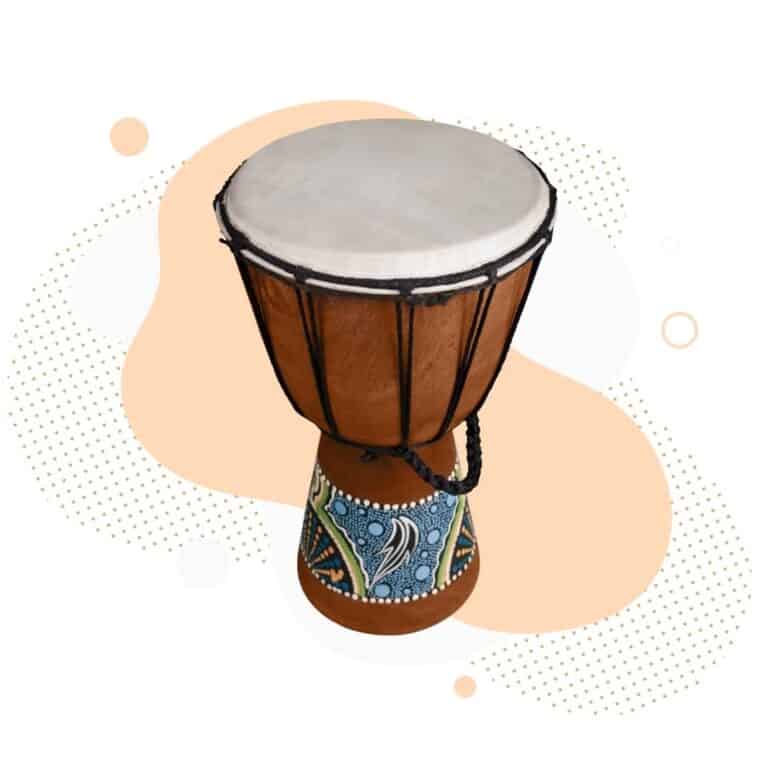
The djembe (pronounced JEM-bay) is one of the most versatile and widespread percussion instruments on the planet. Its huge popularity is down to the fact that it can create an unusually wide range of pitches, namely the bass (low), tone (medium) and slap (high). These sounds are created by striking different areas of the djembe skin with the hands. There are three main sounds that can be played on a djembe: bass, tone and slap. The djembe has been an integral part of spiritual and ritualistic life in West Africa for many generations. It was traditionally only played by griots, well respected high-class court musicians, who used it for story-telling: passing on important historical, religious and cultural information to future generations.
Djembe learning Elementory 1
Understanding The Notes ( Base And Tone/ Treble )
Introduction To Rhythm And Keeping Pulse.
Time Cycles – 2/4, 4/4.
Rock And African Rhythm Patterns.
Djembe learning Elementory 2
Time Cycles – 8/4, 3/4.
Playing Songs (which have Simple Rhythm Patterns).
Konokol (South Indian Rhythmic Patterns).
Playing a Short Solo In The Times Cycles Learnt.
Djembe learning Intermediate 1
Time Cycles – 6/4, 5/4.
Arabic, Indian Folk And Indian Classical Rhythm Patterns.
Playing Songs.
Tihai And Complex Rhythm Patterns.
Djembe learning Intermediate 2
Time Cycles – 7/4, 11/4.
Playing Solo In All The Time Cycles.
Playing Kaidas, Relas And Gath Tukda on Percussion.
Numeric Tihai.
Consolidating The Sense of Pulse.
Polly Rhythms.